

Files
Download Full Text (31.6 MB)
Description
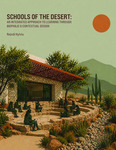
This capstone investigates how high school environments in arid regions can be reimagined through the integration of biophilic design, climate-responsive strategies, and place-based learning. Grounded in personal experience growing up in the Southwest, the project begins by identifying a widespread condition of disconnection, where students are educated in environments that are sealed off from the very landscapes they inhabit. Through a synthesis of literature, case studies, and interviews, the research establishes that exposure to natural systems can measurably improve cognitive performance, emotional well-being, physical health, and social behavior. Biophilic principles such as dynamic light, material connection, prospect and refuge, and sensory engagement are positioned not as aesthetic enhancements, but as essential tools for supporting student success. The project draws from precedent studies including climate-responsive educational campuses and living laboratories that integrate architecture, landscape, and infrastructure into unified systems. These examples demonstrate how outdoor learning environments, passive cooling strategies, native planting, and visible water systems can transform schools into spaces that actively support both environmental performance and daily student experience. Interviews further ground the work in real-world conditions, emphasizing the importance of safety, maintenance, student voice, and long-term usability within desert climates. Design exploration is conducted through an iterative process supported by AI-assisted visualization, allowing rapid testing of spatial configurations, material strategies, and environmental conditions. The resulting proposal envisions a “school of the desert,” where architecture emerges from its context and biophilic elements, the project positions the school as both an educational environment and a living system. Ultimately, this work aims to inspire a shift toward campuses that strengthen connections between students, their communities, and the desert landscapes that shape their lives.
Publisher Location
Las Vegas (Nev.)
Publication Date
5-15-2026
Publisher
University of Nevada, Las Vegas
Language
English
Keywords
schools of the desert; biophilic design; biophilic learning environments; nature-based learning; high school design; connection to nature; arid climate education architecture
Disciplines
Architecture | Environmental Design | Landscape Architecture
File Format
File Size
30664 KB
Recommended Citation
Hylviu, Rejndi, "Schools of the Desert: An Integrated Approach to Learning Through Biophilic & Contextual Design" (2026). Hospitality Design Graduate Student Capstones. 66.
https://oasis.library.unlv.edu/arch_grad_capstones/66
Rights
IN COPYRIGHT. For more information about this rights statement, please visit http://rightsstatements.org/vocab/InC/1.0/