

Files
Download Full Text (363 KB)
Description
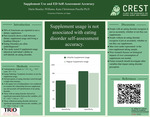
The widespread availability of dietary supplements has contributed to their increased use, with over half of U.S. adults reporting regular consumption. Prior research suggests that supplement use is associated with better overall health, and regulatory legislation has been implemented to mitigate potential adverse effects. One motivation for supplement use may be self-diagnosed health issues; however, incorrect self-diagnoses could lead to inappropriate supplement consumption and potentially contribute to disordered eating patterns. This study examined whether regular supplement users are more accurate in self-identifying an eating disorder. A sample of 511 undergraduate students completed a self-report questionnaire assessing supplement use and eating disorder symptoms. Analyses indicated that supplement use did not significantly influence the accuracy of eating disorder self-perception. These findings suggest that regular supplement consumption is not associated with greater insight into one’s own eating disorder status.
Publisher Location
Las Vegas (Nev.)
Publication Date
Fall 11-21-2025
Publisher
University of Nevada, Las Vegas
Language
English
Keywords
Eating Disorder; Supplements; Muscle Building; Protein; Self-Perception
Disciplines
Medicine and Health Sciences | Psychiatry and Psychology
File Format
File Size
304 KB
Permissions
Google Drive\Institutional Repository\OUR_OfficeOfUGResearch\Symposia\2025 Fall Symposium
Recommended Citation
Beasley-Williams, Darin, "Supplement Use and ED Self-Assessment Accuracy" (2025). Undergraduate Research Symposium Posters. 291.
https://oasis.library.unlv.edu/durep_posters/291
Rights
IN COPYRIGHT. For more information about this rights statement, please visit http://rightsstatements.org/vocab/InC/1.0/
Comments
Mentor: Kara Christensen