

Files
Download Full Text (991 KB)
Description
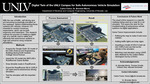
With the rise of artificial intelligence and machine learning algorithms, self-driving cars are becoming increasingly prevalent on our roads. By utilizing these technologies, we can reduce the number of accidents caused by distracted driving. Before implementing these systems in vehicles, however, it is essential to conduct numerous tests. Traditional evaluation of driverless cars on real-world roads can be both expensive and hazardous. To address this, creating a digital twin of an actual road minimizes unexpected hazards, allowing researchers to safely and efficiently test self-driving car programs in high-risk scenarios using computer simulations. This research outlines the process of generating a digital map of the UNLV campus by gathering LiDAR elevation measurements and 3D models of buildings taken from Google Earth for the open-source CARLA car simulator, a platform used to train algorithms in autonomous vehicles. Employing this strategy enables faster and more efficient calibration of driverless cars.
Publisher Location
Las Vegas (Nev.)
Publication Date
Fall 11-21-2025
Publisher
University of Nevada, Las Vegas
Language
English
Keywords
Computer Simulation; Artificial Intelligence; Software Programming; Data Scientist; Machine Learning
Disciplines
Electrical and Computer Engineering | Engineering
File Format
File Size
931 KB
Permissions
Google Drive\Institutional Repository\OUR_OfficeOfUGResearch\Symposia\2025 Fall Symposium
Recommended Citation
Funes, Carlos, "Digital Twin of the UNLV Campus for Safe Autonomous Vehicle Simulation" (2025). Undergraduate Research Symposium Posters. 295.
https://oasis.library.unlv.edu/durep_posters/295
Rights
IN COPYRIGHT. For more information about this rights statement, please visit http://rightsstatements.org/vocab/InC/1.0/
Comments
Mentor: Brendan Morris