

Files
Download Full Text (1013 KB)
Description
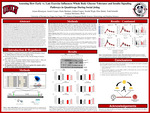
BACKGROUND: Circadian rhythms regulate our physiological and metabolic processes throughout a 24-hour cycle. Disruptions to this rhythm with modern lifestyles creates irregular patterns. One of the most common forms of circadian rhythm disruptions amongst humans happens during the weekends, when people tend to stay up later and sleep in later compared to weekdays. This phenomenon is referred to as social jetlag (SJL).
PURPOSE: To determine whether timed exercise (early vs. late) can reduce the negative effects of social jetlag in mice. More specifically, determining whether exercise conducted in the early or late active phase of mice will impact the effects of a four hour social jetlag.
METHODS: For this study, 90 C57BL6 mice (60 male, 30 female), starting at 10-12 weeks of age completed a 10-week intervention. Mice were divided into either Control (CON; normal 12:12 Light:Dark cycles) or Social Jetlag (SJL; 4 hour phase shift each weekend) groups. Within these groups they were further separated into either a Sedentary (SED), Early Active Phase (EAP), and Late Active Phase (LAP) groups. The EAP groups had voluntary access to a running wheel from zeitgeber time (ZT)-12 to ZT18 and the LAP groups had access from ZT18 to ZT24, where ZT0 indicates the beginning of the light (rest) phase, and ZT12 indicates the beginning of the dark (active) phase for nocturnal mice. Glycemic health was monitored via glucose tolerance tests (GTTs) at baseline and 10-weeks, and area under the curve was assessed. At the end of ten weeks, mice were euthanized and quadriceps were harvested and western blotting for insulin signaling pathway components was performed.
RESULTS: In males, the phosphorylation of Akt, both Serine 473 and Threonine 308 showed no significant effects. However, for p-Akt (Ser473) there was a trend toward significance (p = 0.081). For total Akt levels, males exhibited a significant SJL x Exercise interaction, in which EAP exercise increased Akt levels in CON mice, but not in SJL mice. Conversely, females showed no significant effects for p-Akt (Ser473), p-Akt (Thr308), or total Akt. In males, GTT’s exhibited a significant time (pre-post) and SJL interaction. Exercise did not affect iAUC in CON mice, but all SJL groups demonstrated increased iAUC values compared to baseline. The SJL-LAP mice showed lower iAUC compared to the SJL-SED mice. Females showed no significant effects, although time and SJL interaction showed a trend toward significance (p = 0.057).
CONCLUSION: Social Jetlag has a negative effect on glycemic health and insulin signaling pathway protein expression in males, while no significant effects were observed in females. These data suggest that a consistent routine and exercise should be a priority for glycemic health.
Publisher Location
Las Vegas (Nev.)
Publication Date
11-21-2025
Publisher
University of Nevada, Las Vegas
Language
English
Keywords
western blots; insulin signaling; exercise; social jetlag; glucose tolerance tests
Disciplines
Exercise Science | Kinesiology
File Format
File Size
913 KB
Recommended Citation
Khzarjyan, Ariana; Cooper, Austin; Martinez, Paula; Corpuz, Joshua; Wagh, Srushti; Malek, Elias; and Schrubb, Todd, "Assessing How Early vs. Late Exercise Influences Whole Body Glucose Tolerance and Insulin Signaling Pathways in Quadriceps During Social Jetlag" (2025). Undergraduate Research Symposium Posters. 299.
https://oasis.library.unlv.edu/durep_posters/299
Rights
IN COPYRIGHT. For more information about this rights statement, please visit http://rightsstatements.org/vocab/InC/1.0/
Comments
Faculty mentor: Graham McGinnis, Ph.D.